Identification as a Trust Infrastructure: What is Really Changing After 2026
Until recently, identity verification was perceived as a technical formality: upload a document, go through liveness detection, and gain access. Today, this approach no longer works. The reason is not an increase in the number of attacks but a change in their nature. Identity verification has ceased to be a point of control – it has become an infrastructure of trust that supports access, responsibility, and the right to act.
By 2026, identification is no longer limited to verifying a person. AI agents, autonomous systems, devices, signals, and entire chains of automated solutions are involved in the process. This radically changes the requirements for the verification process, governance, and accountability.
Page Content
When Fraud Stops Being Linear
Modern fraud prevention is faced not with individual fakes, but with synthetic ecosystems. Synthetic identity is no longer manually assembled. It is created as a product: a document captured via a passport scanner, biometrics, behavioural patterns, and digital history – everything is coordinated with each other. Such chains use deepfake, automated checks, behavioural signals and constant adaptation to the protection system.
Attacks do not occur on a one-time basis. They work as an iteration of options: the device, geolocation, timing, and signals change until the verification system fails. That is why single-check no longer works. In response, layered verification, velocity analysis, device intelligence, and continuous risk assessment appear.
From Visual Verification to Data Provenance
Previously, the question was simple: “Does it look like a real person?” Now it sounds different: where did this signal come from, and is it possible to prove its origin?
Provenance is becoming a key concept. Cryptographic proof, hardware attestation, and device metadata, as well as built-in source confirmation mechanisms at the image or document capture level, are used. The verification shifts from the result to the data creation process.
Unsupervised Autonomy is a New Risk Area
AI agents are already making decisions: they process requests, initiate checks, and send documents. The next stage is autonomous actions without humans in the loop. This is where the main issue of accountability arises.
If an offline system starts verification, makes a mistake, or commits a malicious action, who is responsible? Developer, operator, or owner? In response, requirements for audit trails, traceability, explainability, and mandatory human oversight in critical scenarios are formed.
Identification begins to cover not only users but also the systems themselves. Machine identity and the binding of autonomous agents to a responsible person or organisation are becoming mandatory elements of the trust framework.
Governance Ceases to be a Legal Application
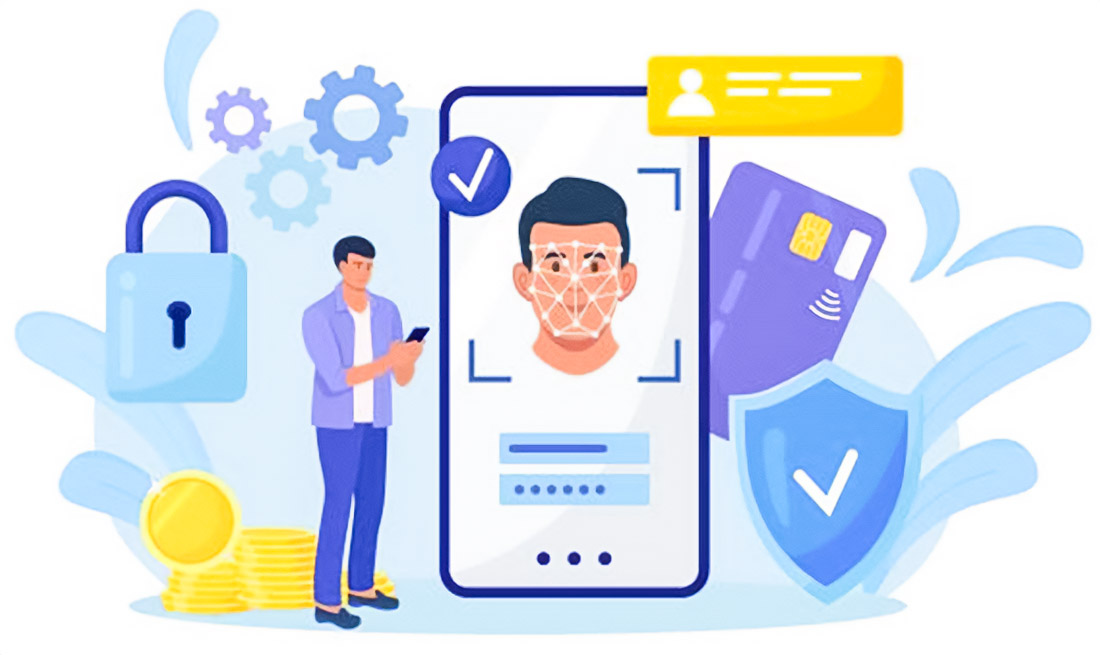
Regulation is no longer catching up with technology – it is being integrated into architecture. By 2027, AI regulation will cover about 50% of global economies, and investments in compliance will exceed 5 billion. This means one thing: governance becomes an operational function.
Identity systems are now expected to:
- Transparent decision logs
- Permanent bias testing
- Managed lifecycle models
- Available on request audit trail
Compliance is no longer a formality. It becomes a permit for participation in high-risk sectors.
From Disparate Checks to Orchestration
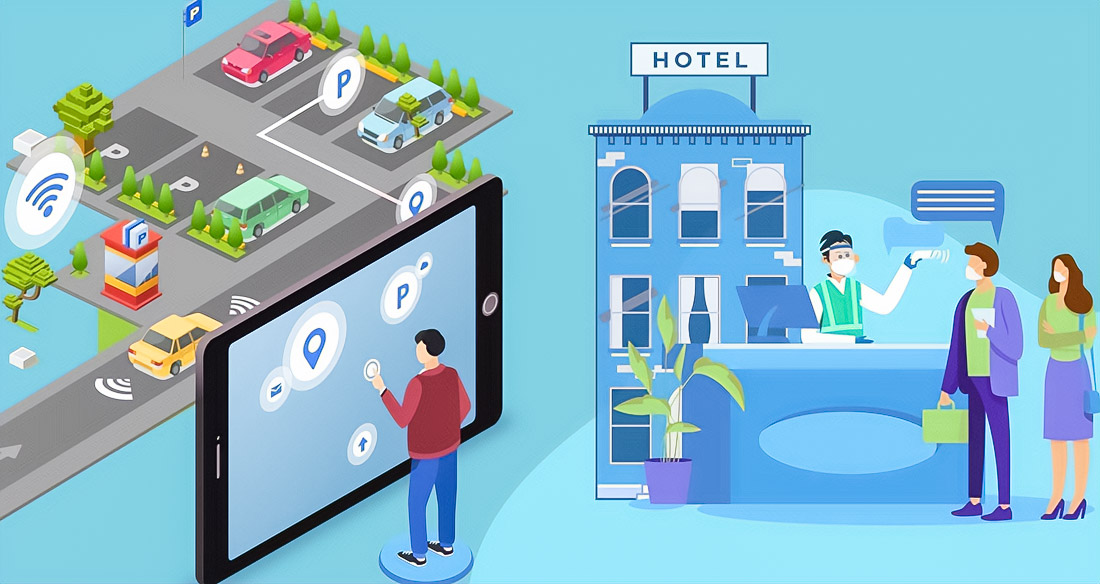
Fragmented IDV stacks can no longer withstand the requirements. Documents captured via passport scanner, biometric checks, screening, and behavioural signals must all be connected through a single orchestration layer.
The platform approach means:
- Unified control of identification flows
- Synchronized policies
- End-to-end traceability of data
- Managed consent management
It’s not about replacing tools but about their coordinated work.
Reusable Identity and Data Control
The “verify once, reuse everywhere” model is no longer a theory. States are implementing reusable digital identity, but key issues remain: interoperability, liability, and trust.
Therefore, verification vendors are shifting into the role of continuous trust providers – custodians of verified attributes, cryptographic attestations, and reusable credentials. At the same time, the demand for privacy-preserving verification is increasing: zero-knowledge proof, selective disclosure of data, and minimisation of storage.
Age as a New Signal of Trust
Age assurance turns from an option into a commitment. Platforms are required to verify age without becoming repositories of personal data. In response, there are age tokens, cryptographic confirmations of “18+” without disclosure of identity, and local storage of attributes.
The Quantum Factor and Long-Lived Data
Even without active attacks, quantum computing creates a deferred risk. Data collected today may be decrypted in the future. This is critical for identity verification, where passports, biometrics, and credentials captured through passport scanner systems are often stored for decades.
Already, more than 5% of information security budgets are allocated to post-quantum cryptography. Crypto-agility, the ability to quickly rotate keys, and the stability of long-lived credentials are required.
Machines as Participants in the Economy
Machine customers are already appearing: algorithms are booking, buying, and signing. Each such action requires identity verification, authorisation, and the ability to revoke rights.
Before the formal legal framework appeared, verification through a trusted chain was used: who created the agent, who manages it, and who is responsible? Identification becomes a way to limit autonomy rather than expand it without control.
Identification as a Test of Thinking
The last shift is going beyond the data. When machines simulate reasoning, the idea of proof of reasoning appears. Behavioural tests, reactions to new tasks, and contextual checks are an attempt to confirm the presence of lively thinking.
But there is a fine line between verification and observation. That is why, in high-risk scenarios, automation is complemented by human evaluation rather than replacing it.
Instead of Output
The past years have been devoted to the question “Who are you?” The following years answer the question “Why can I trust you?” Identity verification ceases to be a barrier and becomes a connecting layer between action, responsibility and the right to participate.
The winners are not those who check faster, but those who build systems that can understand the context, origin, and consequences of decisions in depth, transparently, and fairly.
Recent Comments